


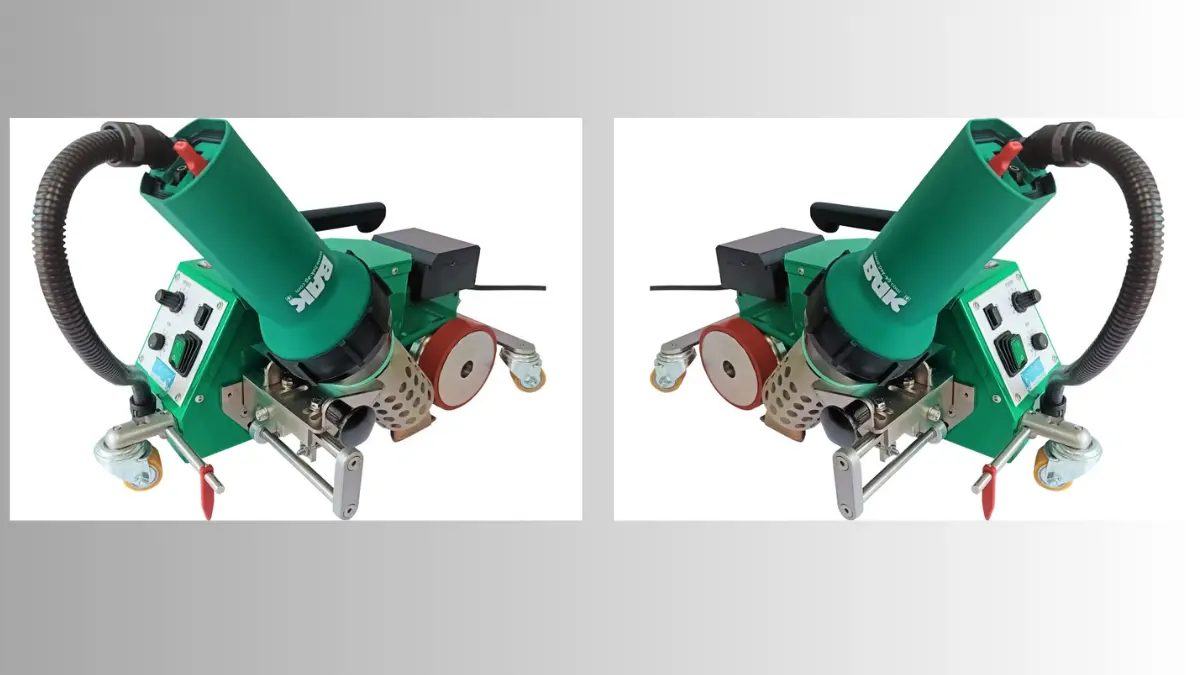
Welding machines are essential tools across many industries. Their versatility in design and use offers today’s welders a multitude of choices to get the job done right.
Hot Air Tools® breaks down everything you need to know about welding machines, including their many applications and styles.
What is a Welding Machine?
A welding machine joins materials by generating intense heat to melt the parts to be joined, causing them to fuse as they cool. Metal, vinyl, and plastic can all be welded.
It operates by producing a high-powered electrical arc that melts the workpiece, which is grounded to the welding machine. This process can involve the use of filler materials to ensure a strong bond between the joined pieces.
Welding machines are essential tools in construction and manufacturing because they provide a durable and efficient method for creating firm connections between components.
How Does a Welding Machine Work?
When you operate a welding machine, you’re essentially initiating a process that involves creating a high-powered electrical arc. This arc is intentionally designed to melt the workpiece, which is positioned and grounded to the welding machine. The extreme heat generated by the arc liquefies the material, allowing it to fuse and form a solid, enduring bond as it gradually cools down.
Welding Machine Applications
Welding machine applications range from construction and manufacturing to specialized fields like plastic fabrication and civil engineering.
Welding machines provide efficient and durable solutions for creating strong bonds, structural integrity, and longevity in different projects.
Roofing
The precision and strength of welded joints make them ideal for maintaining roof structural integrity. They create watertight seals and join metal components. They’re used to weld metal roofing panels and repair leaks so that the roof remains durable and weather-resistant over many years.
Flooring
Welding ensures that flooring material is securely bonded, maximizing its durability and aesthetic appeal. In flooring projects, welding machines join materials such as vinyl, linoleum, and rubber. This process creates seamless and durable floor coverings, especially in commercial and industrial settings.
Plastic Fabrication
The ability to weld plastics ensures that components meet specific design and strength requirements. Welding machines allow for the precise and strong joining of plastic components. This application is critical in industries that require custom plastic parts and assemblies, such as automotive, medical, and consumer goods.
Civil Engineering
In civil engineering, welding machines are used to construct and repair infrastructure such as bridges, buildings, and pipelines. The ability to create strong, durable joints creates safe and long-lasting structures. Welding ensures that metal components are securely bonded to provide the necessary support and stability for large-scale projects.
5 Types of Welding Machines
Welding machines come in various types, each designed to perform specific welding tasks efficiently and effectively.
The following sections will delve into different types of welding machines, highlighting their unique features and applications.
1. Automatic Welding Machines
Automatic welding machines are designed to perform welding tasks with minimal human intervention. They use pre-programmed settings to control the welding process and ensure consistent and high-quality welds. They’re ideal for large-scale manufacturing operations where precision and efficiency are needed.
2. Floor Welding Machines
These are specifically designed for welding flooring materials such as vinyl, linoleum, and rubber. They create seamless and durable joints for commercial and industrial flooring applications. They also ensure that the flooring material is securely bonded, providing a smooth and long-lasting surface.
3. Digital Welding Machines
Digital welding machines incorporate advanced digital controls to enhance the precision and versatility of the welding process. They allow for the precise adjustment of welding parameters, which improves the quality of the welds.
Digital welding machines are commonly used in applications requiring high accuracy and repeatability, such as aerospace and automotive industries.
4. Wedge Welding Machines
Wedge welding machines are used to join thermoplastic materials by applying heat and pressure. A heated wedge melts the material surfaces, which are then pressed together to form a strong bond.
These machines are widely used in the fabrication of plastic products, including tarps, tents, and liners. Wedge welding creates durable and waterproof seams, making it ideal for outdoor applications.
5. Air Welding Machines
Air welding is a cost-effective and efficient method for joining plastic materials. Air welding machines use hot air to weld thermoplastic materials. The hot air melts the surfaces of the plastic, which are then pressed together to create a strong joint.
These machines are versatile and can be used for various applications, including plastic repairs, roofing, and flooring installations.
Find Your Welding Machine at Hot Air Tools®
When it comes to welding, you’ll find the best selection of machines at Hot Air Tools®. Shop by product, application, and more.
Our experts can help you find the right tool for the job – even if it’s not one we sell. That’s our pledge to customer satisfaction and a job well done.
Contact us today to learn more about our products and services.