


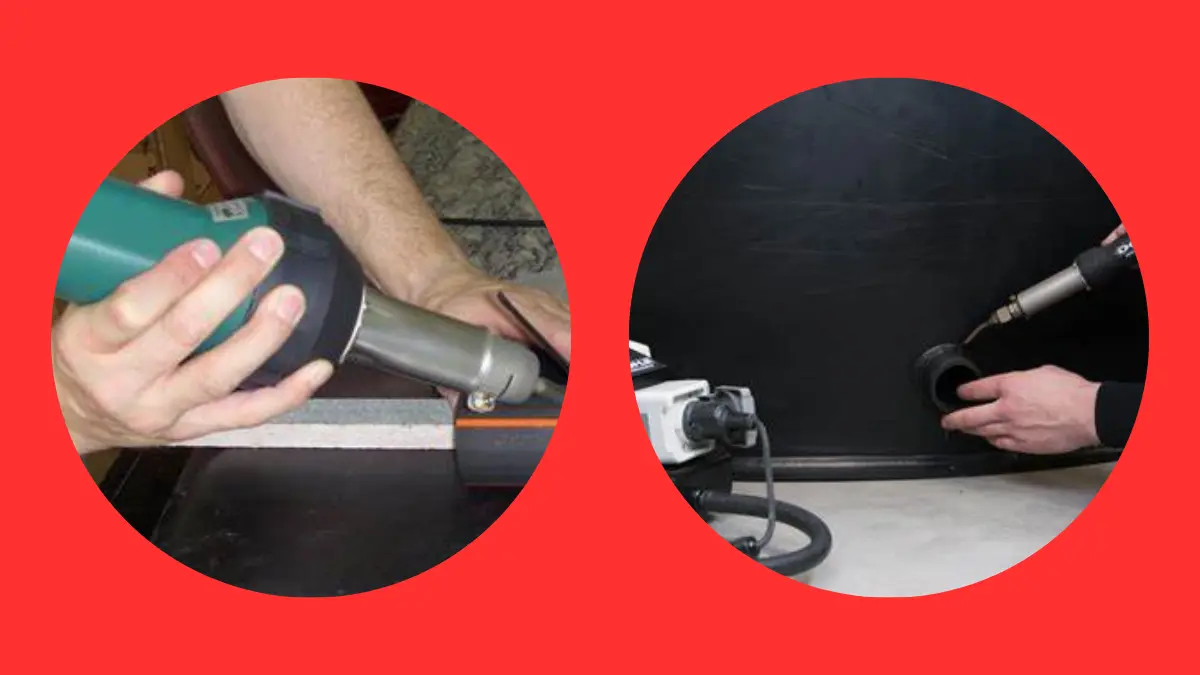
What is a Heat Gun?
Heat guns are a relatively affordable and easy-to-acquire tool that serves an impressive range of uses. Whether you need to thaw frozen pipes or solder copper pipes, remove paint, weld plastic, heat shrink tubing, or bend plastics, a hot air gun is the solution to your problem.
What makes heating technologies so impressive is that they are packaged in such a practical body. Far from being some intimidating heavy duty tool that takes up vast amounts of space and requires substantial training, a heat gun is entirely intuitive.
With the shape and weight of a hair dryer, you use it in much the same way, only for more industrial purposes. As a result, you can operate a heat gun for extended periods without exhaustion. This is ideal if you need it for daily work tasks or you want to quickly take it out to tackle an unexpected problem such as frozen pipes.
Of course, like all accomplished products, heat guns did not suddenly spring up out of nowhere. They have evolved repeatedly over time, using countless iterations to find the most practical and powerful solution possible.
If you are sitting there wondering how the modern heat gun evolved to the point where it is now, here is a short guide to the history of hot air tools®.
The History of Heat Guns
So, where do we start when exploring the history of Hot Air Hand Tools?
Well, firstly, it is important to note that using heat treatment to soften and shape materials is nothing new.
In fact, heat treating dates back thousands of years, with early civilizations using fire to shape pottery and metal. However, the first heat gun as we know it today was invented in the early 20th century by a German company called Steinel. In 1919, the company developed the first handheld gun with a heated element, primarily used to strip paint.
During the Second World War, the heat gun was vital in military operations. Soldiers used electric heat to repair their aircraft and thaw frozen pipes and other supplies in icy temperatures.
What’s more, heat guns were used to shrink wrap military supplies for transportation, demonstrating their usefulness for various purposes.
After the end of the war, the use of heat guns expanded to other non-military industries.
For instance, heat guns became popular in automotive repair shops for removing decals and adhesives. Moreover, the construction industry embraced heat guns for various tasks, including welding plastic, shrinking tubing, and bending PVC pipes.
Fast forward to the 1960s, and technological strides led to the development of more complex and sophisticated heat guns.
One of the most significant advancements was the introduction of the electronically controlled heat gun, which allowed users to set specific temperature and airflow settings. This made heat guns more versatile and precise, meaning they could be used to tackle a wider range of tasks.
As the seventies and eighties rolled on, heat guns became increasingly popular among DIY enthusiasts. Homeowners began using heat guns for domestic tasks, including removing wallpaper, thawing frozen pipes, and stripping paint. This skyrocketed demand for heat guns, leading to the development of more affordable models. As a result, they became far more accessible to the general population.
In the nineties, the development of ceramic heating elements further improved the performance of heat guns. Ceramic heating elements offer faster heating times and more consistent temperatures, making heat guns even more versatile and efficient. Additionally, improvements in ergonomic design made heat guns easier and more comfortable to use for extended periods.
How Heat Guns Have Evolved
Today, thermal processing equipment is used in a wide range of industries and applications, from thawing pipes to welding remote control airplanes.
In addition to their original uses in automotive and construction, they are now commonly used in electronics manufacturing, food processing, and even in the production of musical instruments. Heat guns have become an essential tool for many professionals, from welders to chefs.
The modern heat gun is typically powered by an electrical heating system and features adjustable temperature controls, variable temperature, and airflow settings. Some models also include features such as LCDs, temperature sensors, fan-only settings, overheat protection, and automatic shut-off mechanisms for safety.
Interestingly, there has been a growing interest in environmentally-friendly heat guns. These new heat guns use renewable energy like solar power to run without producing a carbon footprint or consuming less energy than their conventional rivals, reducing their environmental impact.
How to Buy Professional Heat Guns
Interested in buying a modern heat gun with today’s technology? Hot Air Tools® has got you covered. Check out all our professional heat guns here. Contact us to learn more about all the hot air tools® we have to offer.
To round up, like all great products, the history of the heat gun is a story of innovation and adaptation.
From its early use in military operations to its modern-day applications in various industries, the heat gun has undergone huge changes and improvements over the years.
As technology advances, we’ll likely see even more advancements in the world of heat guns, making them an even more versatile and essential tool for professionals and DIY enthusiasts alike.