


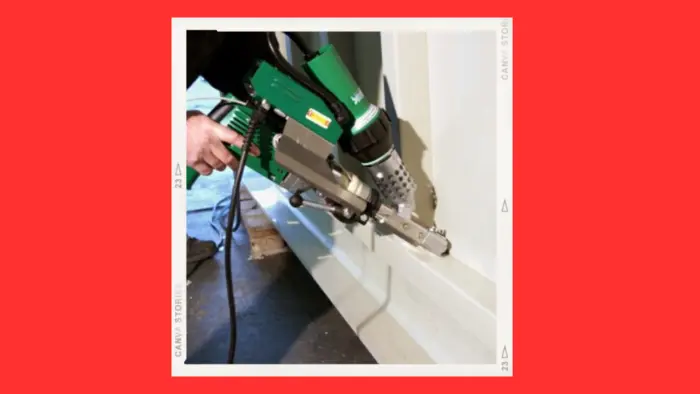
Plastic has become indispensable in many industries thanks to its versatility, durability, and cost-effectiveness. In an era where efficiency and customization are key, plastic fabrication offers solutions that are lightweight, cost-effective, and adaptable to numerous applications.
These processes are crucial in enhancing product performance and manufacturing components for a wide range of industries globally. In this blog post, we’ll explore its different methods and benefits as well as tips when using a hot air welder for the process.
What is Plastic Fabrication?
Plastic fabrication is a broad term that encompasses several processes used to mold plastic into different sizes. It plays a crucial role in producing a wide range of products, from everyday household items to sophisticated industrial components.
Each method of plastic fabrication has specific applications, depending on the type of plastic material used and the intended use of the final product. Some of the methods may not be as efficient for fabricating certain types of plastics, so it’s important to know which method to use to achieve your desired outcome.
Which Plastic Fabrication Method Should I Use?
When deciding which method to use, ask yourself the following:
- Do I need to use single plastics or plastic compounds for my project?
- What proportion of plastic to non-plastic material is intended for my product?
- What role will plastic play in my fabrication process, such as adhesion, lamination, or as the base product?
- What are the dimensions and intended use of the final product I am creating?
Let’s take a look at several of the most common plastic fabrication methods and their uses.
Plastic Welding
Plastic welding is ideal for joining thermoplastic materials and is extensively used in the automotive industry for repairing bumpers, headlights, and other plastic parts. It’s also used in the construction of tanks and containers, as well as in the plumbing and HVAC industries for piping systems.
Compounding
Compounding — also known as blending — is used to create plastics with customized properties for specific applications. For instance, adding flame retardants for electrical applications, enhancing UV resistance for outdoor products, or improving the durability of automotive components.
Plastic Lamination
Plastic lamination is best suited for applications requiring enhanced durability, moisture resistance, or aesthetic appeal. It’s commonly used in packaging to protect products from environmental factors, in the production of laminated safety glass, and for decorative surfaces in furniture and cabinetry.
Molding
Molding, including injection, blow, and rotational molding, has a wide range of applications. Injection molding is perfect for high-volume production of small to medium-sized parts like toys, automotive components, and medical devices. Blow molding is primarily used for making hollow products such as bottles and containers. Rotational molding is suitable for large, hollow items like tanks and kayaks.
Plastic Extrusion
Plastic extrusion is used to produce long, continuous shapes like pipes, tubing, window frames, and profiles. It’s a preferred method for manufacturing products that require consistent cross-sectional shapes, such as PVC piping in construction or plastic straws in the food industry.
Plastic Foaming
Plastic Foaming creates lightweight, insulative materials ideal for applications in insulation (like polystyrene foam in building construction), cushioning (such as foam padding in furniture), and packaging materials that require shock absorption.
Die Cutting
Die Cutting is particularly useful for producing high volumes of precise, thin plastic shapes. It’s commonly used in the electronics industry for insulators and gaskets, in the medical industry for disposable items, and in the automotive industry for interior trim pieces.
Thermoforming
Thermoforming is often employed for packaging solutions, including blister packs and food containers, due to its ability to form detailed shapes and structures. It’s also used in the automotive industry for larger, more complex parts like dashboards and door panels.
Plastic Fabrication Benefits
There are many benefits to fabricating plastic. First, just for using plastic instead of steel or metal, you’re saving a lot in costs. Plus, with the use of plastic, the high malleability makes it extremely versatile. Now let’s look at the benefits of the actual fabrication process.
- Less expensive: More parts can be made per hour, and all cost less to produce.
- Ease of forming: Because of its high malleability and low melting point, it’s relatively easy to form simple and complex products from plastics.
- Reduced finishing: Unlike most metals, you can color plastics before fabrication, doing away with some post-fabrication procedures like painting.
- Faster production: Fabricating plastic often entails fast cycle times and quick turnover rates.
- Chemical resistance: Plastics are typically less prone to chemical reactions, such as rusting or oxidation, than metals are.
- Longer life span: Thanks to the plastic fabrication process, it can be a one-time deal, meaning once it’s done, you won’t have to maintain it or do it again, which means the final product will last longer.
How to Use a Hot Air Welder for Plastic Fabrication
Hot air tools® are instrumental in processes like welding and shaping plastics. They provide the precise control needed to effectively join the materials, making them indispensable in professional plastic fabrication setups.
Here’s a step-by-step guide on how to perform plastic fabrication using a hot air welder:
Step 1: Prepping the Materials
Before you begin, ensure you have the appropriate safety gear. This includes heat-resistant gloves, safety glasses, and a well-ventilated workspace to avoid inhaling fumes.
Then, clean the surface you’re welding so it’s free of any dirt, grease, or oil. Use a suitable cleaning solvent if necessary. Next, if you’re fabricating a new item, cut the plastic to the required size and ensure the pieces fit together well.
Step 2: Set Up Your Welder
Choose a nozzle that suits the type of welding you’re doing. For example, a speed welding nozzle is commonly used for rod welding. You’ll then need to set the temperature on the hot air welder according to the type of plastic you are welding. Remember, different plastics melt at different temperatures.
Step 3: The Welding Process
Start by tack welding the pieces. This involves lightly melting the surface at a few points to hold the pieces in place. If you’re using a welding rod, select the appropriate rod for your plastic. The rod should always be of the same material as the pieces you’re welding.
Next, use the hot air welder to heat both the plastic surface and the tip of the welding rod. Move the welder back and forth to distribute the heat evenly. As the plastic begins to melt, apply the welding rod to the joint. The rod will melt and fuse with the plastic pieces, creating a bond.
Apply steady pressure and move along the joint, ensuring that the rod and the plastic surfaces melt and merge together. After welding, use a silicone roller or a spatula to smooth out the weld while it’s still hot. This will strengthen the bond and improve the appearance.
Finally, allow the welded joint to cool down naturally. Avoid using water or other cooling methods as they can weaken the weld. Once cooled, you can trim any excess material and finish the surface as required.
Find the Right Plastic Fabrication Tool with Hot Air Tools®
For your plastic fabrication needs, our welding tools will help you get the best final product. It’s crucial to find a supplier you trust to provide the best products and guidance in the process if needed.
That’s what Hot Air Tools® will do for you. We are here to serve you; that’s our goal! Contact us to learn more about our products, or visit our blog for more free insights!